
How to Get Court Records
Start online with re:SearchTX or the local search linked from the County Clerk page. Then route a document request to its custodian. The District Clerk keeps 452nd Judicial District Court case records. The County Clerk handles County Court files and a broad set of other county records. The Justice Court clerk handles that court's records, while City of Menard citations go to the municipal court. Requests may be made through an available portal, in person, by mail, by phone, or by the published email for the correct office.
- Identify the court, case category, party, cause number, and date range.
- Name the exact docket sheet, pleading, order, judgment, exhibit, or existing record needed.
- Search online, or contact the proper clerk by phone, email, mail, or an in-person visit.
- State whether a plain, electronic, paper, or certified copy is required and ask for a fee estimate.
- Check redactions and certification when the copy arrives, then retain the clerk's response.
Choose the Menard Custodian
The split-clerk model controls each request. District cases go to the District Clerk. County Court files go to the County Clerk. Justice Court and municipal records stay with those courts. A judge or agency director may hold judicial administrative records under Rule 12.
Use the court name, cause number, case style, date range, exact item, and desired format. Calling first can prevent a request from being routed twice. Clerks locate existing records but do not give legal advice or create a new analysis.
Types of Court Records
Court record can mean several products. A docket gives a time-ordered event list. A filing contains the text submitted to the court. A signed order states the court's action. The reporter's record captures proceedings when one was made, and certification authenticates a copy.
- Case indexes and docket histories
- Pleadings, motions, notices, and attachments
- Signed orders, judgments, and dispositions
- Court reporter's records of proceedings
- Plain and certified public copies
Five Menard Record Layers
The case index identifies a matter. The docket lists activity. Filed documents contain text and attachments. The reporter's record preserves proceedings. A certified copy authenticates a selected item. Each layer answers a different question.
- Index
- Basic searchable case fields.
- Docket
- Dated filings, settings, and orders.
- Filing
- The actual document submitted.
- Reporter's record
- The official record of a proceeding.
- Certified copy
- A clerk-authenticated reproduction.
Public portal depth varies with integration, case type, role, and restrictions. A missing image does not show that no filing exists.
The Texas court directory search can identify a court or clerk contact.
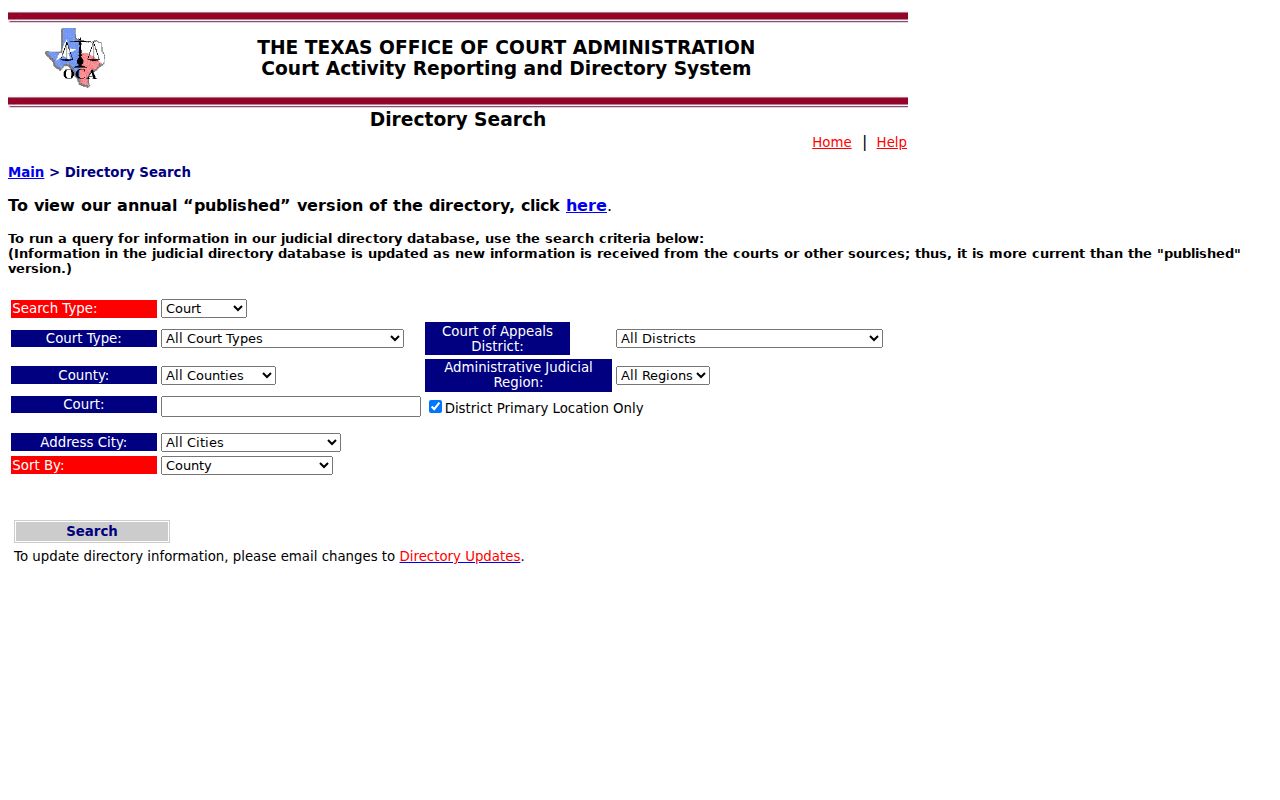
Its court-type, county, city, and personnel fields locate offices, not individual cases. Move from the directory to the proper clerk request rather than entering a party name there.
What a Court Record Contains
A file is organized around its cause number and case style. It may hold pleadings, notices, orders, judgments, and public attachments. The docket sheet ties those items to dated events. Exhibits may follow separate handling rules, and protected data can be redacted.
| Cause number | The case key; copy the filed cause number exactly. |
|---|---|
| Pleadings | Petitions, answers, motions, and party filings. |
| Orders and judgments | Signed rulings and final or interim action. |
| Docket sheet | The chronological index of events and settings. |
| Exhibits | Evidence or attachments subject to access limits. |
Menard County Records Differ
The County Clerk also handles official public records, vital records, marriages, assumed names, and marks and brands. Those are distinct families. A deed search is not a County Court criminal search, and a marriage record does not prove a civil case result.
The OCA access page shows the separate judicial-record route.
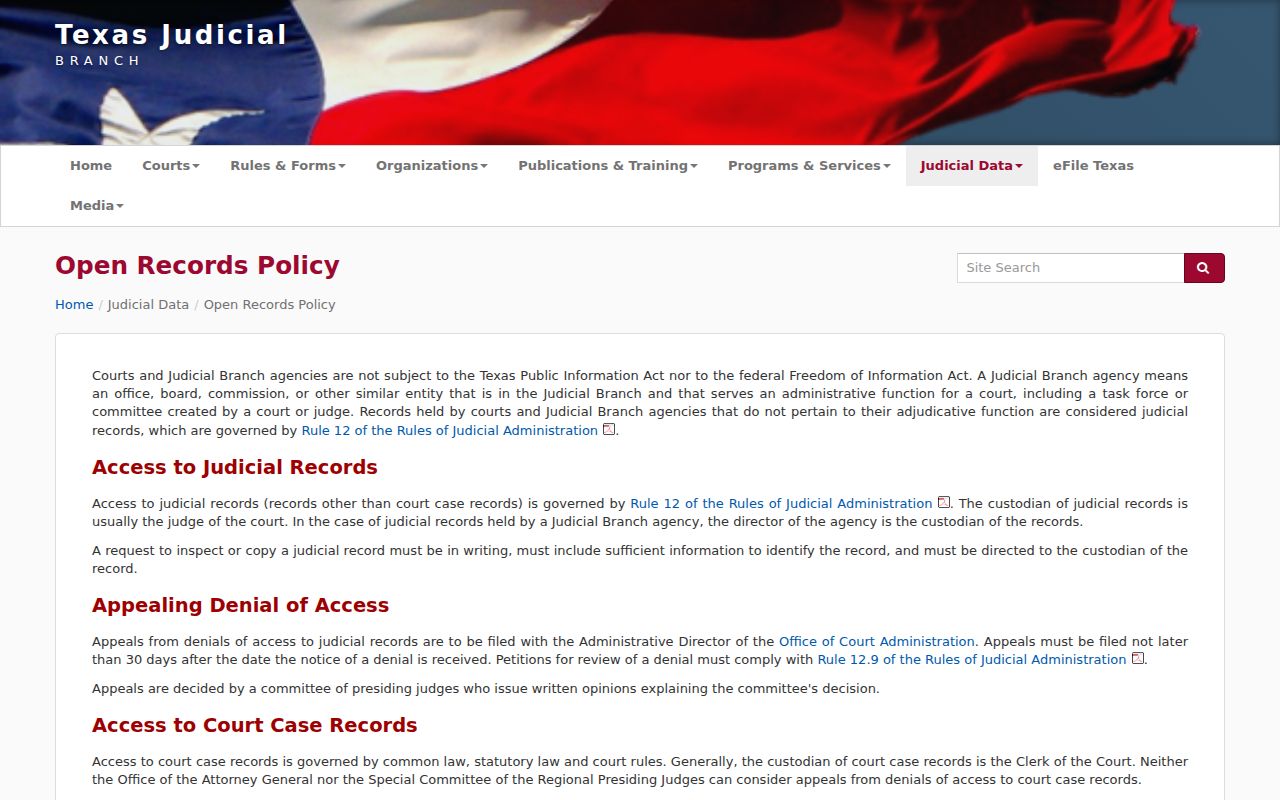
The category determines the custodian, fee, access rule, and review path.
Certified Copies and Fees
A plain copy reproduces the public record. A certified copy adds the clerk's authentication. A portal export is not certified. For a judgment, provide the cause number, case style, exact document, delivery method, and number of copies. Ask the clerk to quote the current charge before payment.
| Item | Amount |
|---|---|
| Official public record, first page | $27.50 in that category, not a universal court fee |
| Added page, part, or rider | $4 in that official-record category |
| Covered re:SearchTX document | $0.10 per page, $1 minimum for permitted users |
| Court copy or certification | Confirm with the responsible clerk |
Menard Virtual Hearing Records
The 452nd District protocol separates virtual access from the official record. Documents and exhibits must follow approved formats. The court reporter's record, not the broadcast, controls. Recording or capturing a stream may be barred.
Contact the clerk or reporter with the case and hearing date. The District Court page identifies the local court team and protocol resources. A screen capture is not a transcript.
Public Access and Sealed Records
Texas case records are governed by common law, statutes, court rules, and orders. The clerk is generally custodian. Rule 12 instead governs judicial administrative records and does not require a custodian to create a report. Sealed, juvenile, protected family, probate, mental-health, warrant, and personal data may be withheld or redacted.
Key Rules:
Texas Rule of Judicial Administration 12 governs judicial administrative records, not every case file.
Texas Government Code Chapter 552 covers county administrative records but is not the route for every court record.
Controlling statutes, rules, orders, and redaction duties govern public case files.
Write a Narrow Menard Request
Ask for an existing item and address the right custodian. A useful request names the public docket entries or public orders in a stated court, then supplies the cause number and date range. Add format, certification, delivery, and fee-estimate needs. If the item is an administrative policy, label it as a judicial administrative record and ask for the Rule 12 custodian.
A Rule 12 denial has a review route to the OCA Administrative Director within 30 days. That is not the same as review of a clerk's case-record decision. Ask which rule governs before using an appeal path.
Restricted Menard Records Still Exist
Inspection can be cheaper and more useful than ordering a large file without review. Ask whether the public portion may be inspected during regular hours and whether staff can provide an existing docket sheet first. If pages must be mailed, include a return address and ask about postage. For electronic delivery, confirm the file type and whether certification can be supplied in that format.
Restricted does not mean nonexistent. A sealed case, redacted filing, confidential family or probate item, juvenile matter, or record outside the portal may produce little or no public detail. Ask for the legal basis and the process for any lawful access that may apply. Do not ask staff to bypass an order or reveal protected personal information.
Menard Request Channel Checklist
For an in-person Menard County court records request, bring the cause number and a short document list. For mail, include contact details and ask the clerk to quote copy, certification, and postage charges before fulfillment. An email request should avoid unneeded private data. If the clerk points to another office, note the court named in that response and resend the same narrow description to the new custodian.
Inspection can help narrow a large file before copies are ordered. Ask whether the public portion is available during regular business hours and whether an existing docket sheet can identify the needed filings. Keep the response date, staff office, quoted fee, and delivery terms. Those details provide a reliable trail if an online result later changes or a document must be requested again.